Since Robert Taylor founded the Antique Airplane Association in 1953, the mission has been to “Keep the Antiques Flying,” and AAA members like you, have done so with creativity and generosity to this day. The long-term dream to build a proper Restoration Center at Antique Airfield, Blakesburg, Iowa, is now a reality. To all who contributed both talent and funds, thank you.
It’s time now to put your investment to work and re-store the APM’s first acquisition, the 1931 Stinson Junior “S” NC12165, to its proper flying status, at an estimated cost of$250,000, about one-fourth the price of a new Cirrus SR22. The restored Junior will turn more heads, at least heads that understand the historical beauty of a cabin monoplane’s radial engine firing up at dawn and lifting into a timeless sky before the sun clears the tree line. Such imagery, as you know, requires support.
Raising funds is awkward but necessary. APM has never borrowed money for major projects. This project relies upon numerous pledges from AAA members like you…like us. Vendor donations of materials (tires, fabric, dope, parts..) are graciously welcome to offset cash requirements. The sky is never a limit, so larger donations are appreciated. You understand how this works.
Properly done, the Stinson Junior can be airworthy in a timely manner, a vague term that means, quickly without sacrificing quality. We all want to see Junior fly for the first time since 1987. To keep the project moving, some work — such as engine, prop, and instruments — will be farmed out to qualified contractors. Fuselage and wings will go to a qualified shop (AAA member in the restoration business). Smaller items, such as tail surfaces, struts, metal work, and final assembly will be in the hands of journeymen A&P/IAs and volunteers in the APM Restoration Center, the ideal place — made possible by your donations — to bring it all together.
APM’s last fundraising drive was in 2019 for the Gone West Memorial, which was finished in 2022. The Stinson Junior project already has $25,000 in seed money, but the restoration won’t begin until we raise the full sum. No one likes a stalled dream. We know that aeromath is daunting, and burning through 2023 dollars won’t take long. But, what if you could turn back the clock to 1931?
There’s no “what if,” because you can by pledging today to see NC12165 — your APM’s 1931 Stinson Junior S — fly into countless tomorrows.
Founded 1965
Accepting this challenge to support your Stinson Junior Restoration project brings invaluable reward, and we’re not talking coffee mugs and tote bags that Paul Berge pilfered from public TV. Instead, pledges of $100 or more bring tangible rewards, which will be detailed shortly. First, let’s consider the historical significance of this project.
When NC-12165 was manufactured on September 11, 1931, it received a new logbook to record its lifelong story. Eight months later (May 1932), Charles O’Conner of Springfield, Massachusetts, purchased the Model S Junior and operated it in his FBO until 1964 when the Stinson was purchased for the APM through the generosity of founder and president of the APM, Jack Lowe. Price: $3,500.00. History was transferred, and Bob Taylor flew it to Iowa where it’s been flown by Dick Willetts, Harold Lossner, Richard Bach, Tom Lowe, and many others. Now — as a donor — your name will transfer with it into the future.
During O’Connor’s tenure as owner/operator, Junior was based not only in Springfield, Massachusetts, but also Schenectady and Albany, New York, plus Hartford, Connecticut, where Bob Taylor took delivery in 1964. It was there that O’Connor revealed more pages from the airplane’s past. Log-books at the time showed the airframe had 2,458 hours total time and was on its fourth engine, the old-style Lycoming 215-hp R-680 with open rockers affording antiquers, like us, the joy of watching valves work as grease spits everywhere — what we all love in antique airplanes. The current R- 680 is S/N 672, installed in 1945.
Unlike other civilian aircraft during WWII, the Stinson was not stored or drafted into the military, but O’Connor reported it was used in a “secret cargo flight” to haul components for the atomic bomb from Schenectady, New York, to Knoxville, Tennessee, for the General Electric Company. Anecdotal? Perhaps, but a log entry dated July 9-11, 1944, bolsters the story. History is often coy, but no one has ever complained of radiation sickness after riding in NC-12165.
Are you ready to accept this challenge to restore your APM’s 1931 Stinson Junior? You’ve read this far, so the answer is likely, “yes,” to which we say, “thank you.”
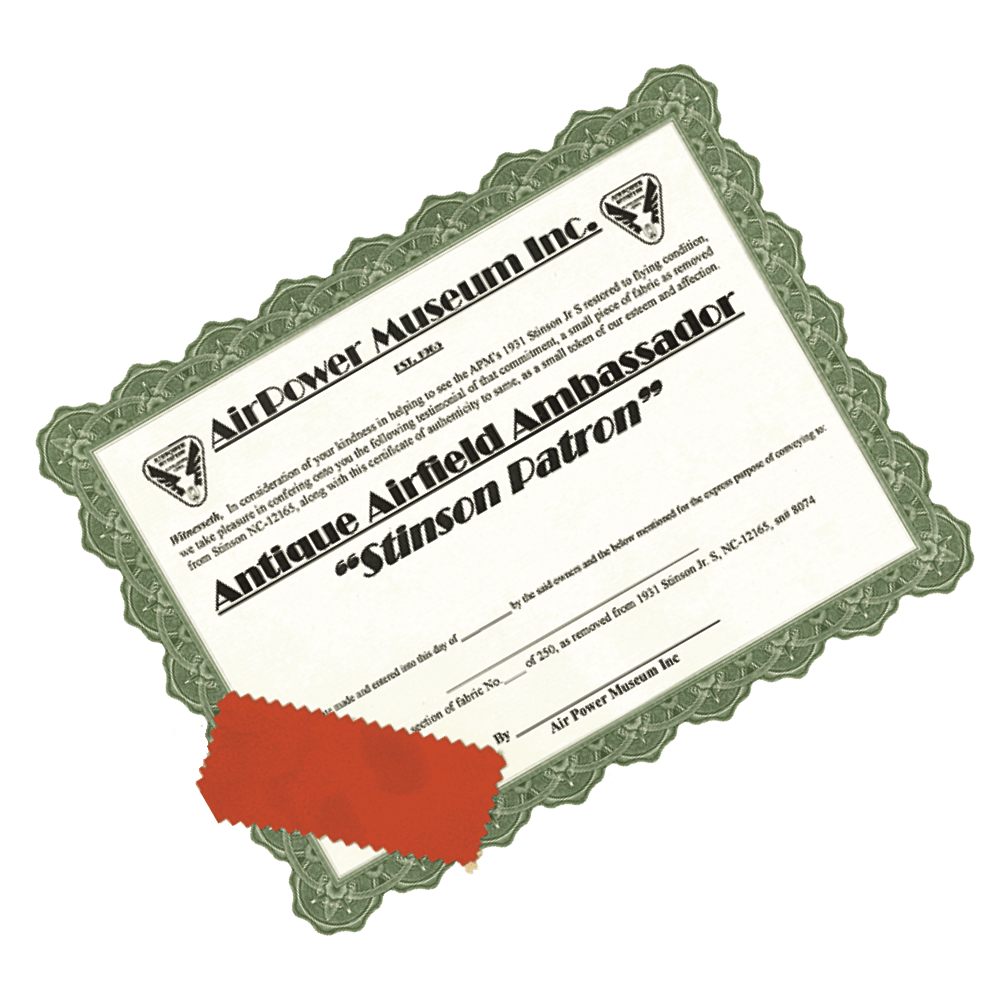
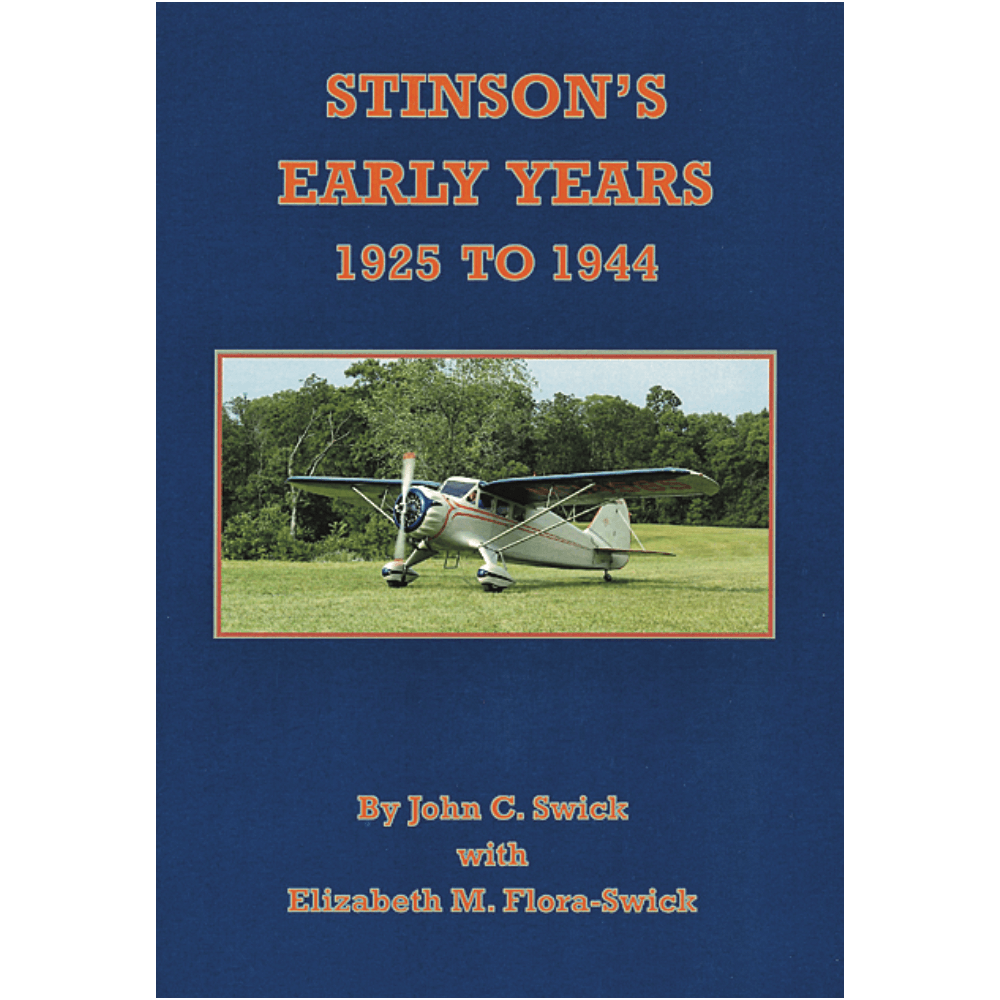
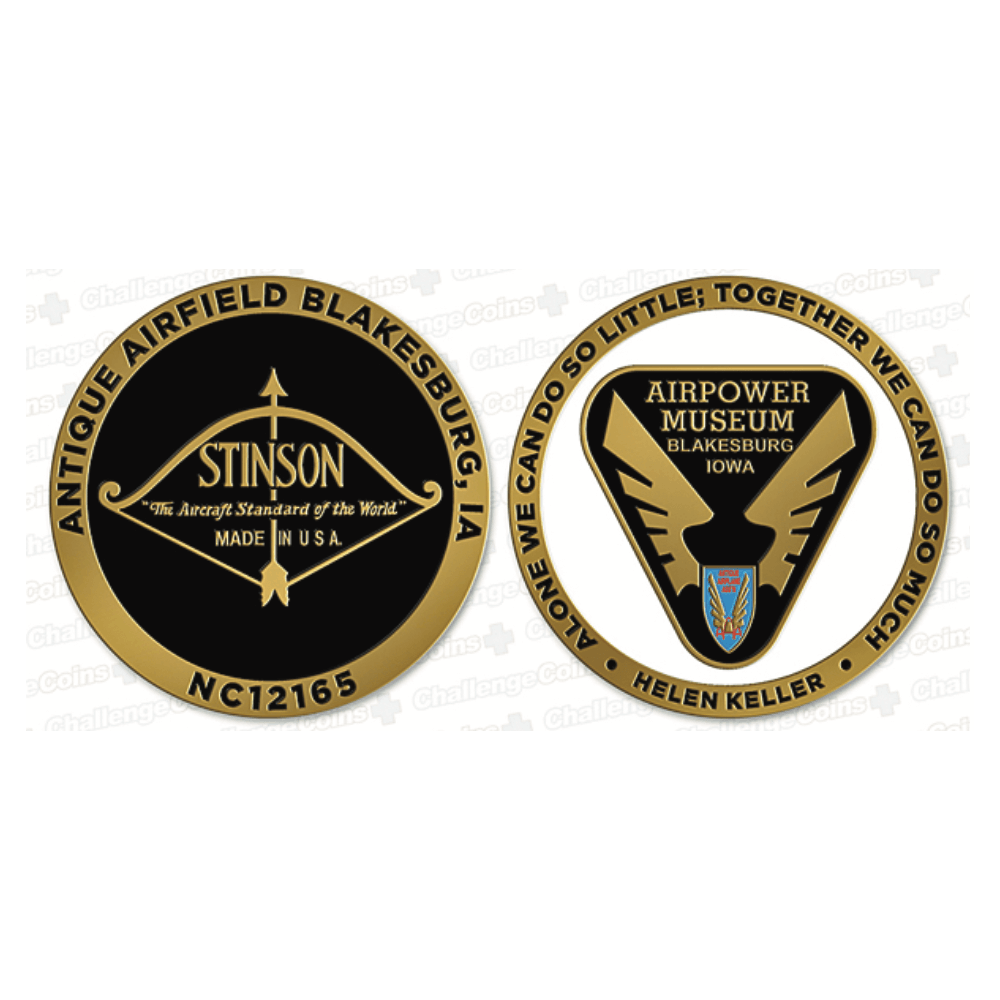
And, although you’re not donating for the premiums (your name in a flight log, fabric strip, autographed copy of John Swick’s Stinson’s Early Years 1925-1944, and challenge coin), that fabric strip would make a great bookmark when reading John Swick’s book and shows the world that you are a valued APM donor who, in the spirit of Jack Lowe and Bob Taylor, wants to keep history not only alive but also flying into the future in the APM’s 1931 Stinson Junior.
Thank you,